
How to start a junk removal business
A practical roadmap for new operators: the legal and insurance setup, truck and equipment trade-offs, disposal relationships, choosing a pricing model, and winning your first local customers.

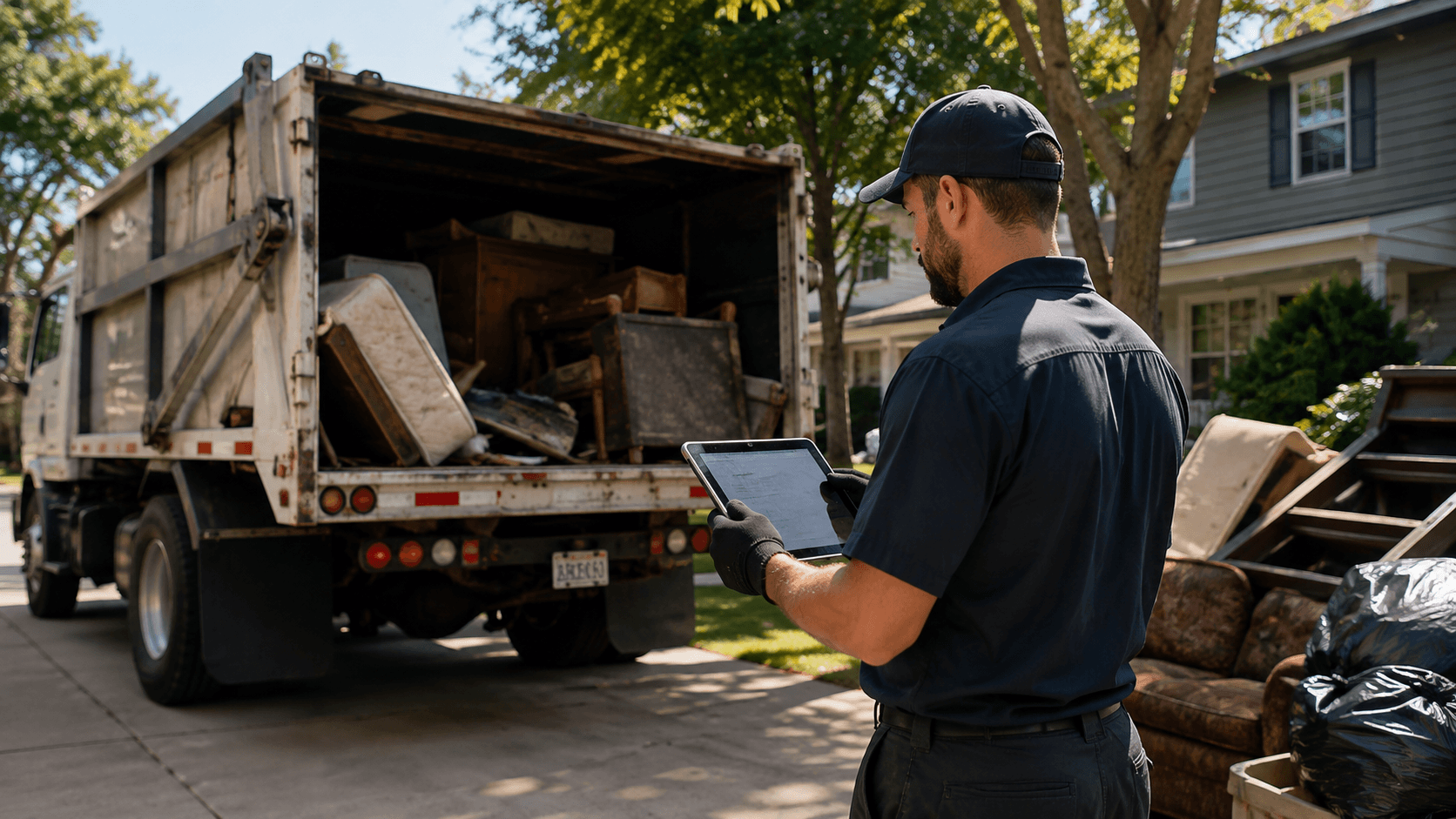
What the business actually involves
Junk removal is a logistics business: you are paid to show up on time, load efficiently, and dispose of loads lawfully at a cost that leaves margin. The lifting is the easy part. The parts that sink new operators are underpriced jobs, missing insurance, and no relationship with the facilities that receive their loads.
Startup costs scale with ambition. The same service can start from a rented box truck and a small crew or from a full fleet with branded trucks - there is no single required investment. What follows is the sequence that applies either way.
Set up the legal and insurance basics
Requirements differ by state and city, so verify locally before spending on anything else:
- 1.Register a legal entity and obtain your EIN. The SBA's business guide walks through entity selection and registration step by step.
- 2.Check local licensing. Many municipalities require a general business license; some require hauler-specific permits for transporting waste.
- 3.Commercial auto insurance for the truck - this is non-negotiable before a wheel turns.
- 4.General liability insurance covering property damage during removals. Customers will ask for proof.
- 5.Workers' compensation once you hire, as most states require.
- 6.USDOT number if your vehicle weight or interstate operation brings you under FMCSA registration rules.
Skipping insurance to save money is the classic new-operator mistake: one scratched floor or injured helper exceeds years of premiums.
Truck and equipment decisions
Your truck defines what jobs you can accept.
| Option | Trade-off |
|---|---|
| Pickup + trailer | Cheapest start; smaller volume per trip means more dump runs per day |
| Box truck (12-16 ft) | Standard for volume pricing; higher cost but fewer trips |
| Dump trailer | Handles heavy debris well; slower loading without a crew |
Beyond the vehicle: furniture pads, straps, dollies, work gloves, a broom, heavy-duty bags, and basic disassembly tools cover most residential jobs from day one.
Volume pricing needs a defined truck size. If you quote by load fraction, publish your usable cubic-yard capacity so customers can compare you fairly - it is also how you avoid arguments onsite.
Build disposal and recycling relationships
Know where every load goes before your first job: the transfer station or landfill that accepts general waste, its gate fee structure and hours, and which local recyclers take scrap metal and electronics. Visit them with your registration documents ready.
Three habits separate professional operators from fly-by-night ones. Sort every load so metal, e-waste, and reusable furniture leave the truck before the landfill run - diversion cuts gate fees at some facilities and builds donation partnerships. Keep the disposal receipt for every load, because it protects you if dumped material is ever traced back to your marketing area. And learn your jurisdiction's rules for regulated items: refrigerant appliances, mattresses, tires, and paint usually have designated handling paths.
Choose a pricing model
Most US operators use volume pricing (fractions of a truck), item pricing (per-piece menus), or a hybrid of both. Whatever you choose, price every job against real inputs: gate fees at your disposal destinations, drive time both ways plus loading time, crew size and hourly labor cost, fuel with maintenance, insurance, and admin reserves, and finally a margin that survives slow weeks. A single-item pickup still consumes half a morning once drive time and gate fees count. Operators who skip minimums compete themselves into working for free.
To model your exact fuel burn, wear reserves, dump gate fees, and hauls required to hit your income goals, use our interactive Junk Removal Business Profitability Calculator. For national pricing benchmarks that customers will compare you against, review our US junk removal pricing guide.
Getting your first customers
New operators win early work through proximity and responsiveness, not brand. Start with local visibility: most junk removal searches are local, so a complete, verified business profile where residents actually compare providers matters more than a polished website in month one. Photograph before-and-after results of real jobs, with customer permission - those images are your strongest marketing asset.
Reviews compound the same way. Ask every satisfied customer early; the first twenty reviews carry your next hundred quotes. Partnerships round out the picture - property managers, realtors, estate liquidators, and renovation contractors produce repeat commercial volume that smooths seasonal dips.
This is exactly why Jenexo exists: create a clear profile showing your service area, disposal practices, and reviews, so nearby customers comparing options can find and contact you directly.
Your first 90 days
- 1.Weeks 1-2: entity, EIN, insurance quotes, truck decision, facility visits.
- 2.Weeks 3-4: equipment purchased, pricing model set, business profiles live, first jobs booked through personal network at honest prices.
- 3.Month 2: systematize quoting (photos + item lists), collect reviews after every job, track actual time and disposal cost per job against estimates.
- 4.Month 3: review the numbers. Jobs that lost money tell you whether to adjust minimums, tighten routing, or decline certain material types.
The operators who last treat every job as data: what it truly cost, where the load went, and whether the customer would book again. Run it like that from job one and growth takes care of itself.